Note – This post is Part 2 in a series of articles highlighting unpublished documents related to Union activity on Virginia’s Northern Neck in 1863.
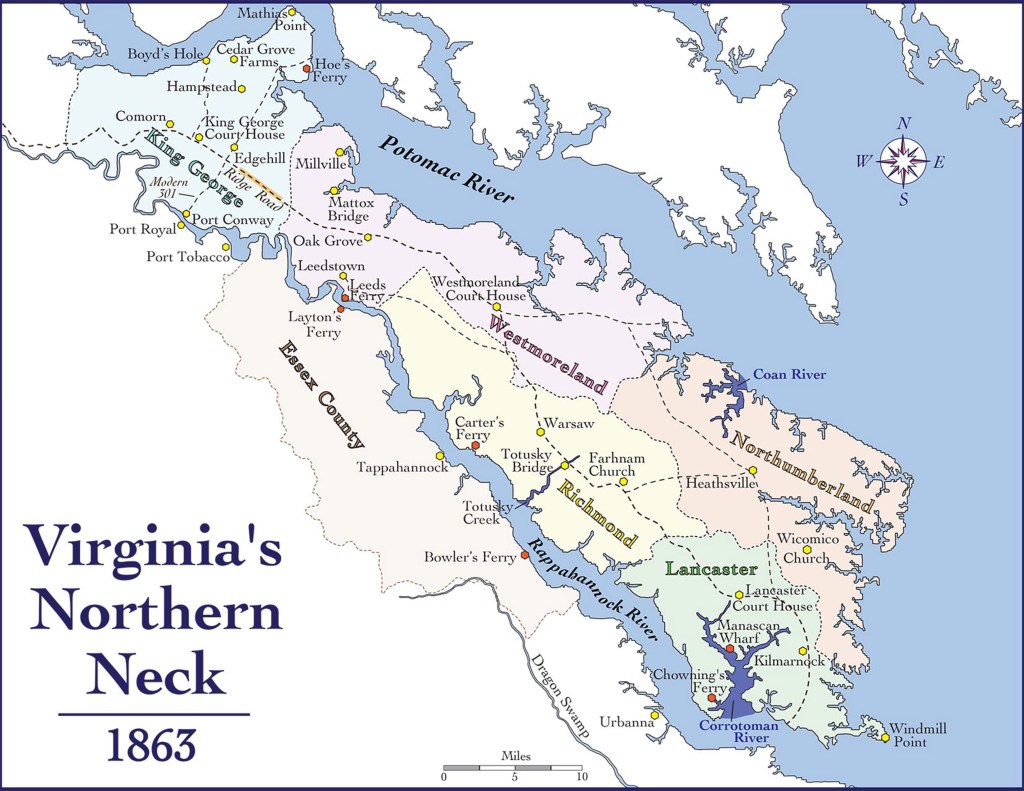
In a letter to a Chicago newspaper, a soldier correspondent, described an incident in which several men, he thought to be civilians, confronted and fired upon a patrol from the 8th Illinois on January 30, 1863.
As “five men from company A, in charge of a sergeant, were returning from a foraging expedition for cattle, nine armed men, dressed in gray, suddenly rose from behind the wayside fence, not 30 feet distant, and leveled their pieces, shouted: ‘we’ve got you now surrender!’ The party had all passed, except the sergeant, who was riding behind. ‘Go to hell,’ he answered, ‘give me that carbine,’ and, snatching one from the nearest man, he let them have its contents. The guerrillas fired a volley, wounding two of our men severely, when the sergeant, sending one on with the wounded, charged with the two men he had left, upon the nine ‘graybacks,’ who turned and fled. After firing several shots, our men returned. Major Beveridge immediately followed the guerrillas, [and] ascertained that they were citizens, headed by a rebel Butternut, and succeeded in tracing them to houses near our lines.
“Three squadrons of the Eighth New York cavalry were ordered to report to Major Beveridge at daylight next morning, and with these and his own reserve, he spent Saturday and Sunday scouring the country between the Potomac and Rappahannock, for 20 miles below our lines. One squadron went to the east by Westmoreland Courthouse, another a little farther west, while Major Beveridge scouted near the Rappahannock, going as far as Leeds on that river, 15 miles below King George Courthouse. Several citizens were arrested and sent in for trial. At Leeds a rebel Sutler was taken, with a valuable load of Yankee notions, just such things as the rebels are most in need of, which he had succeeded in smuggling across the Potomac and thus far toward rebeldom.
“Two other settlers were taken on their way to the Potomac, and a letter intercepted from a rebel lieutenant to his ‘dear Mary Jane,’ saying that four of them had met a dozen yanks, killed them and got away safe…
“From information gained it is believed that large quantities of the less bulky articles of clothing, etc. are constantly being smuggled over the Potomac and the country below our lines to the rebels…”
In a letter home, a trooper said of the incident, “Last evening two boys … came in quite badly wounded. They were sent out (six in number) to kill a beef four miles outside of our picket lines and on their return to camp they encountered 20 or 25 armed citizens. They (the citizens) rose from behind a ditch fence, firing a volley at them. Our Boys wounded 2 or 3 in their returning fire but they could not capture any of them as they took refuge in a woods near at hand and the ditch fence was between them and our boys. Maj. Beveridge … went out in pursuit of the Rebel civilians ….and had succeeded in arresting some 20 or 30 which must have been some of the guilty party. I would like to see them brought to justice (strung up by the neck). One of our Boys has 7 buck shot in his body and his arm broken. The other is shot with a ball in the cap of the right shoulder…”
Another trooper identified the assailants as “Rebs, who had crossed the river for the double purpose of visiting their friends and gathering whatever information they might of our forces in that vicinity.”
The two wounded men were privates Samuel Peterson and Elijah Hall. By one account, Peterson was thought to have been mortally wounded. Another described his arm “as so badly shattered that the surgeon deemed it necessary to amputate, but [Peterson] declined, saying that “he would rather die than lose his arm.” The nature of his wounds suggested that he had been hit with rounds from three different weapons. Still, even though a compound fracture of his arm never healed properly and a projectile (bullet or buckshot) remained in his arm resulting in an open abscess the rest of his life, Peterson re-enlisted and served through the war.
A bullet fractured Elijah Hall’s right shoulder and lodged under his collarbone. He never regained use of his arm and received a medical discharge in April 1863.
Returning from the expedition, Maj. John Beveridge sent the following to Lt. Col. David Clendennin:
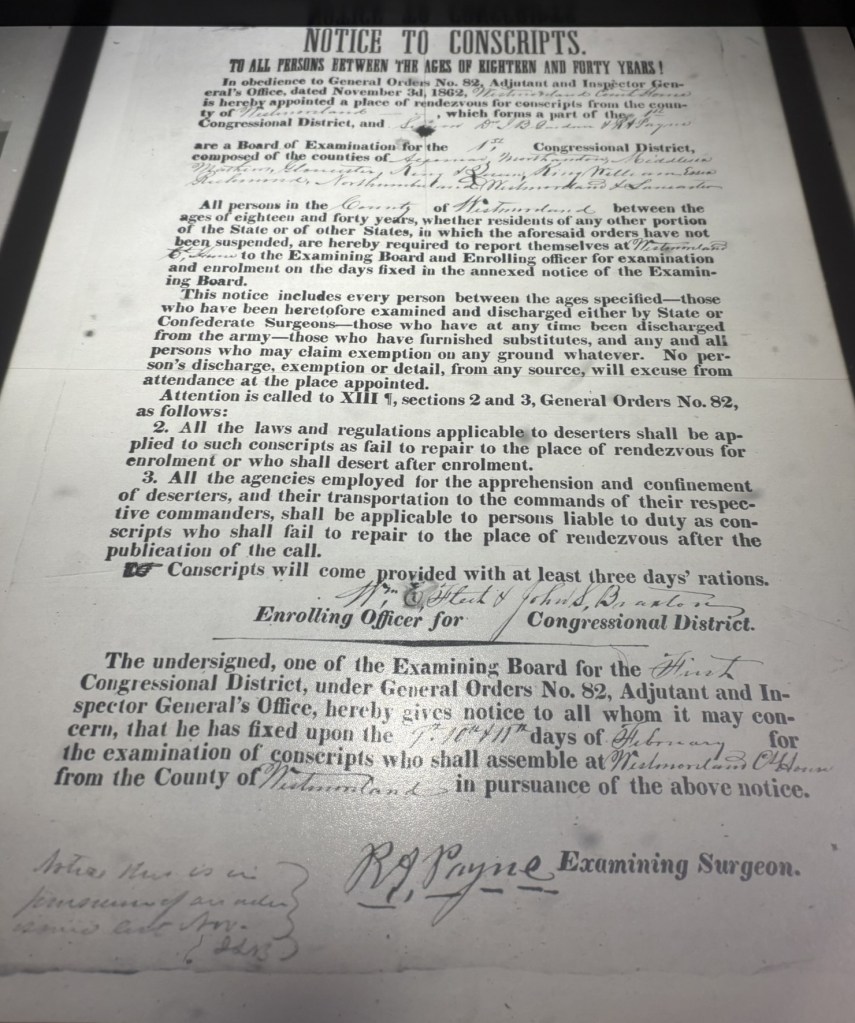
“The enclosed notice was taken from a shop down in Westmoreland Co on the last scout. It has just been presented me. Would it not be well to attend said ‘Conscription meeting’… I would be most happy to lead such an expedition, but in my present state of health would not dare conduct it. I can furnish 40 men who would delight to go. Please submit it to Col. Gamble…”
Colonel Gamble forwarded the document “without delay, in case this meeting requires to be superintended.” Before sending the information to General Stoneman, now commanding the Cavalry Corps, General Pleasonton, commanding the division, advised that he had already dispatched “a force…to attend to this meeting.”
On February 12, Colonel Gamble, described by his men as “the King of Terrors,” sent in a Southern deserter, along with the following note, which offers a glimpse of his lighter side.
“…Yesterday a man approached the picket line near Edge Hill and was arrested and is now on his way under guard to your HQ. He says he is a deserter from the Rebel Army, crossed near Leedstown, that his name is Robert Trigger, a private of CO E, 15th VA Cavalry, that he is tired of pulling triggers, and wants to retire to private life to his family… His appearance indicates a scarcity of clothing, soap and water in the Rebel Army…” According to a regimental roster, Trigger surrendered, seeking medical care and requested that he not be exchanged or paroled. He died at Old Capitol Prison later that month. [Emphasis is in the original.]
Gamble closed his message by noting, “Major Medill and his command were at Oak Grove last night, sixteen miles from King George C. H. and will return here today and a report will be forwarded without delay.” Maj. William Medill, 8th Illinois, had been tasked with attending to the meeting and his report is in the Official Records.
Submitting his report on February 13, Medill showed his own wry sense of humor, explaining, “I was too late, the meeting I was sent to preside at having transacted the principal portion of its business [the previous day], and was, therefore, ready to adjourn…” Medill then proceeded through Westmoreland County and into Richmond County. He remarked upon the “very large trade in contraband goods of every description carried on between Maryland and Virginia,” reporting that he had passed along to Capt. Craig Wadsworth, “particulars as to where to visit, the roads to follow, and the people to call upon.” Wadsworth, a member of Gen. John Reynolds’s staff, was already preparing to lead another expedition down the Neck. Captain Wadsworth’s report is also published.
Summing up recent events for his hometown newspaper, a trooper in the 8th Illinois, wrote, “We made several raids down the neck into Westmoreland and Richmond Counties and succeeded in capturing a number of smugglers with their supplies on the way from Maryland to the rebel army. The booty consisted mostly of Yankee notions, fancy articles and whiskey. On our last excursion we spilled about fifty barrels of the latter commodity, [Medill termed the liquor ‘villainous whisky] besides capturing a detachment of the 15th VA Cavalry, who were sent over to gather up conscripts residing on the disputed territory.” I can only identity one man captured.
Relieved from picket duty shortly thereafter, Gamble gathered his men near his headquarters at Cormorn, and returned to Belle Plain on February 17.
Three days later, Col. Judson Kilpatrick, then commanding the 1st Brigade in Gregg’s division, reported:
“Yesterday morning, Capt. [John] Mitchell of the [2nd NY] stationed near Port Conway discovered that the Rebels were placing into a large flatboat (with a log cabin on it capable of holding 100 men) sacks and muskets, and that a large number were at work about there – some 60 in all. Fearing that an attempt might be made to cross, I strengthened my line of pickets at that point. I am satisfied now that the enemy are but on a foraging expedition down the river. Should this be true, a trusty scout will keep me advised of their movements and if they land near my outer pickets, they shall not return. At this hour all is quiet.
“There is, in a house near the dock at Port Conway, large quantities of wheat and corn. It may be possible that an attempt may be made to carry it off, but the attempt shall fail if made.” Kilpatrick may have been referring to either ‘Walsingham,’ or to “Belle Grove,” which is a stately Bed and Breakfast today.x
As reforms instituted by army commander Joseph Hooker bolstered army morale and slowed desertions to a mere trickle, reports such as Kilpatrick’s, regarding the movement of supplies from the Northern Neck across the Rappahannock River, became the impetus for future expeditions through the spring.
Sources:
Unpublished documents from the National Archives
Thomas Benton Kelly letters
Aurora Beacon
Chicago Tribune
Woodstock Sentinel
John Fortier, 15th Virginia Cavalry


Thanks! Bob, I always appreciate reading one of your posts. C.I.
LikeLike